Tree Root Protection Mats
Protect tree root zones while still moving vehicles, equipment and people across the site with mats supplied worldwide in pallet and container loads from European ports.
Why Tree Root Protection Ground Protection Matters
Construction and maintenance work often has to take place close to valuable trees. Without protection, repeated vehicle movements quickly compact soil, break the surface and cut into root systems. The result can be long term tree stress, poor drainage, safety concerns and expensive claims.
Tree root protection mats give you a defined route or work area that sits over the root zone. Loads are shared across a wider footprint, so fewer points of high pressure reach the roots below. Surfaces stay more level, mud is easier to manage and heavy equipment can move through sensitive areas with far less disturbance. For bulk buyers, rental fleets and distributors, this creates a repeatable way to comply with arboricultural guidance while still getting work done.
Watch How Our Mats Protect Tree Roots
Sometimes the easiest way to understand tree root protection is to see it in action. Our short video shows how composite mats create a stable route through root protection areas, how vehicles track along the same line, and how the ground underneath looks once the mats are lifted.
Use this clip in your own toolbox talks or distributor training to explain the principle of root protection tracks to crews and customers.

What You Gain From Composite Tree Root Protection Mats
Using composite mats to protect root zones gives you a reusable tool that works across many projects and countries.
- Keep vehicle routes open through root protection areas during construction and maintenance
- Limit soil compaction and shear that damage roots and reduce water and air movement
- Protect surfaces such as grass, gravel and informal paths around trees
- Create visible boundaries so drivers and crews understand where protection starts and ends
- Reuse the same mats on multiple projects, improving return on every pallet or container

How Our Tree Root Protection Mats Work
Surface protection mats are laid directly over the ground you need to protect, sometimes on a geotextile where extra separation is required. Interlocking edges keep panels aligned so vehicles and pedestrians cross smoothly, while textured surfaces provide grip and spread pressure over a wider area than bare tyres or feet. On grass and landscaped areas, mats distribute loads through the root zone, limiting shear forces and compaction that cause bare patches.
On hard surfaces they act as a sacrificial skin, taking the scuffs, stains and point loads from plant, stages and temporary structures. When work is complete the mats are lifted, cleaned and reused on the next site.
Weight loading is not always straightforward, so read our weight loading guide before you choose.
Download Our Tree Root Protection White Paper
For schemes where tree protection is central to planning approval, you may need more than a simple product sheet. Our tree root protection white paper explains how composite mats can be used alongside BS 5837 recommendations, how to think about root protection areas, and what to discuss with arboricultural consultants.
Use it to brief design teams, support method statements and give clients confidence that your proposed solution is based on practical experience.
Sectors That Depend On Tree Root Protection
Composite root protection mats are used wherever access is needed close to valuable trees and landscaped areas.
Real Results From Tree Root Protection Projects
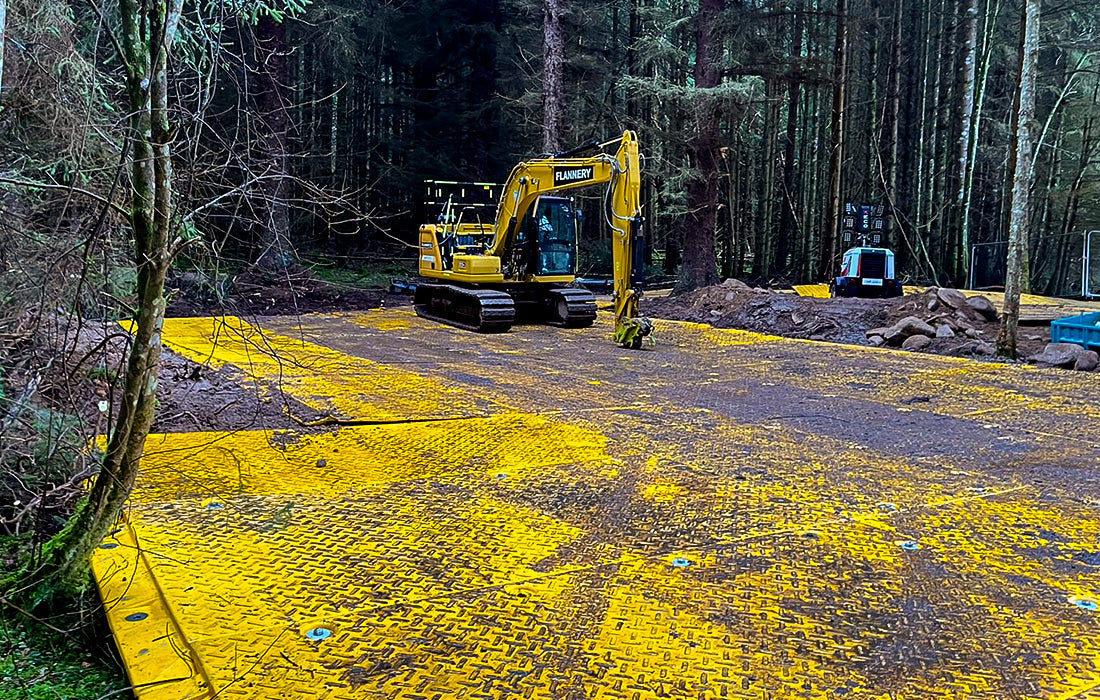
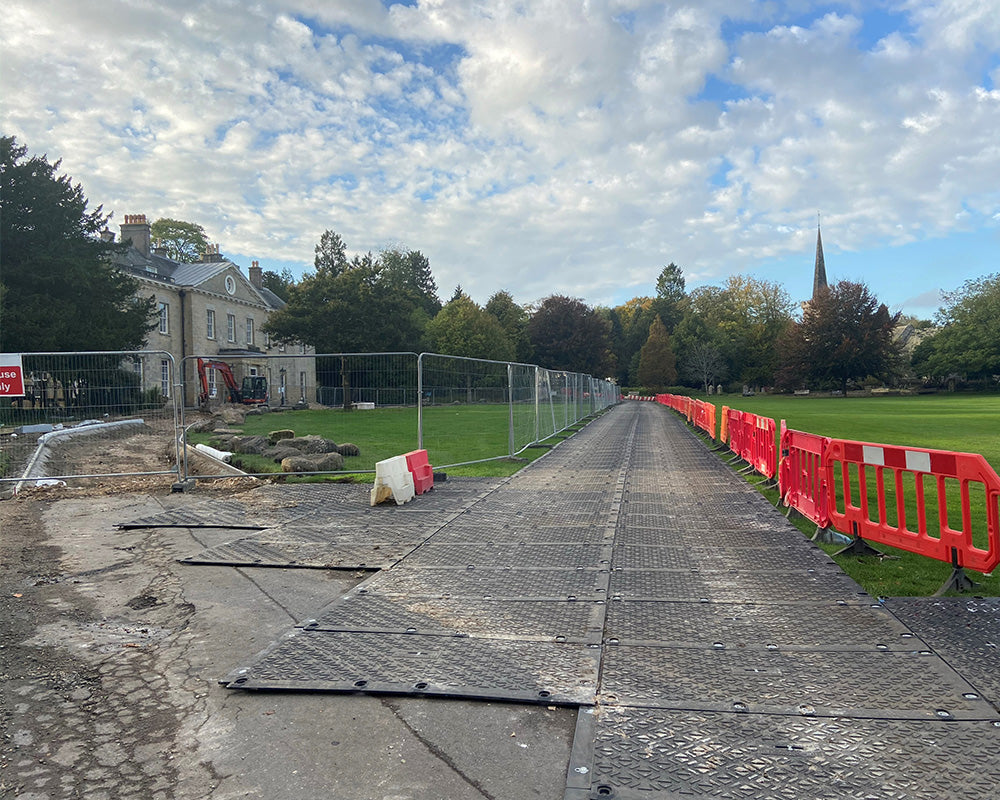
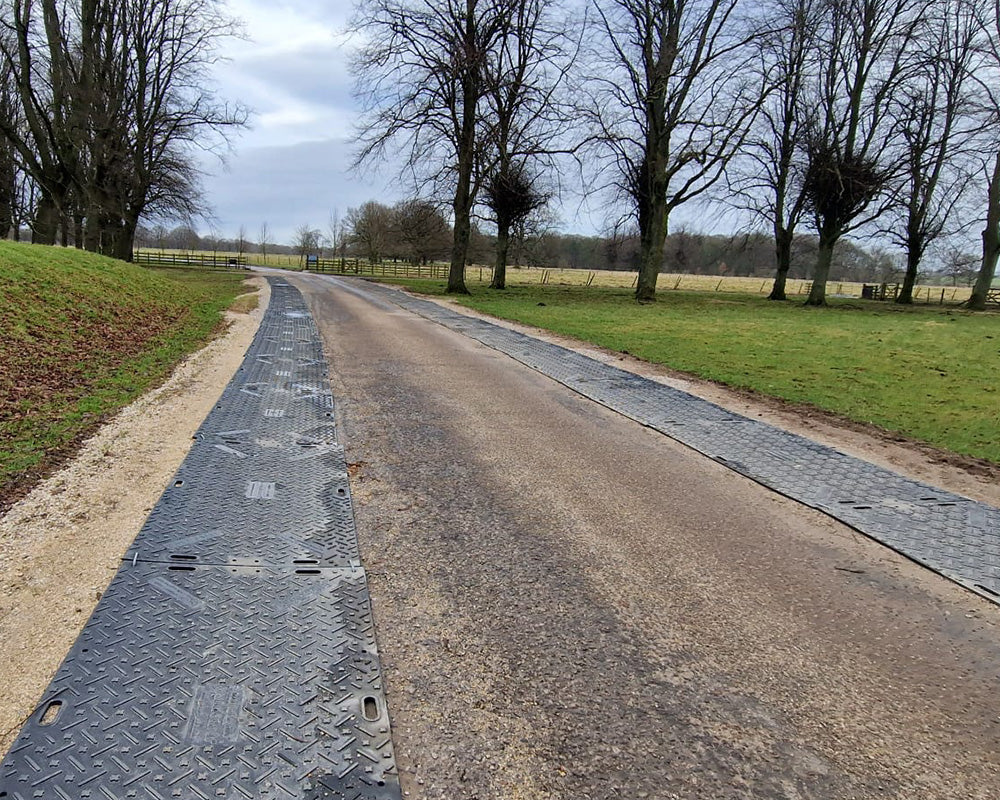
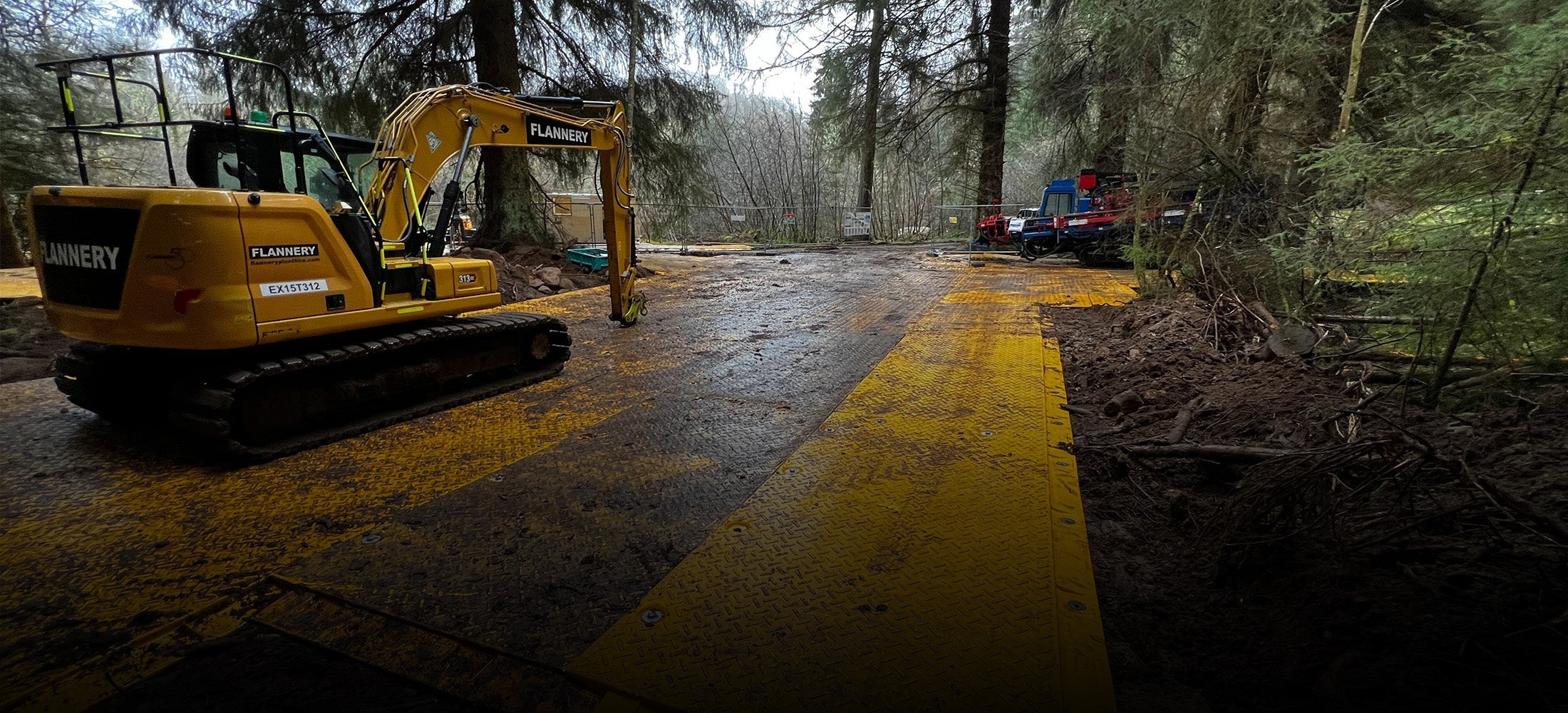
GroundGuards mats protect tree roots on projects ranging from urban infill sites to historic estates and woodland venues. These examples show how composite systems perform in different environments.
Best Selling Mats For Tree Root Protection
These mats are our most popular options for tree root protection routes and work areas. Pricing is available on request for pallet and container quantities.
Need help now? Share a few details in enquiry form and we’ll come back quickly with advice and next shipment availability.